
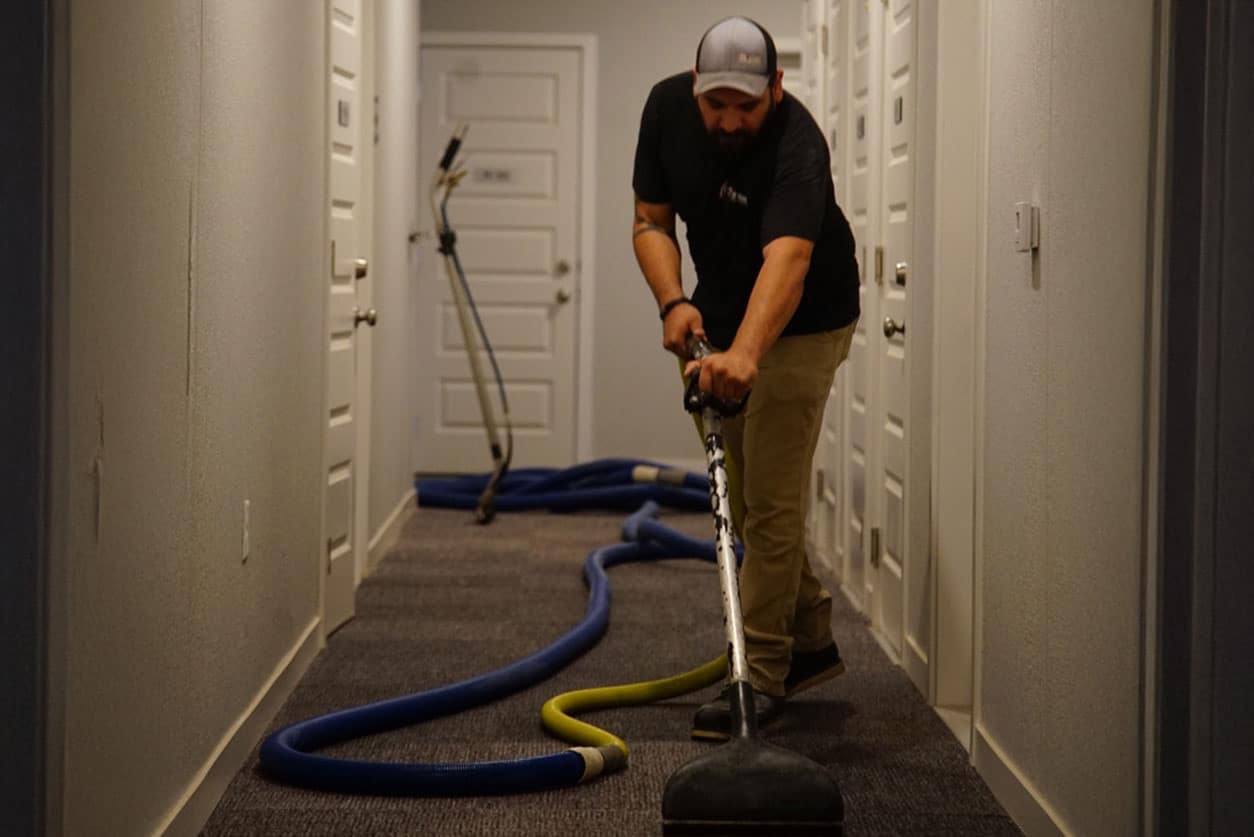
If you’ve lived in the Kansas City area for any length of time, you know that our weather is anything but predictable. From the bone-chilling polar vortex freezes that can cause vulnerable pipes to burst in Overland Park homes to the spring thunderstorms that frequently challenge the basements of Lee’s Summit, water damage is a constant, quiet threat to our homes. These incidents rarely happen when it’s convenient, and they often leave KC homeowners feeling overwhelmed by the sheer scale of the cleanup.
When water enters your living space, it doesn’t just sit there. It migrates, soaking into your baseboards, wicking up your drywall, and seeping under your floorboards. Within 24 to 48 hours, what started as a small leak can evolve into a full-blown mold crisis.
At Frontier Restoration, we’ve seen how stressful this can be for families across the metro. To help you navigate the complexities of water damage mitigation and restoration, our specialists have developed this comprehensive 5-step checklist to help you take control, protect your property value, and ensure your family’s safety.
SAFETY FIRST: A Note on Site Access
Before proceeding with this checklist, please ensure your home’s immediate environment is safe. Do not enter any area with standing water if the electricity is still on, if you smell gas, or if you suspect structural damage to the ceiling or floor. If the water is contaminated (sewage) or if you are at all unsure of your safety, stay out and wait for a professional assessment. Your property can be restored; your safety cannot.
If the space is unsafe, or if you’re unsure, it is best practice to wait it out for professional help.
Step 1: Immediate Safety & Water Source Control
Your first priority when you see water in your home is always safety. Before you worry about the Persian rug or the hardwood floors in your home, you must ensure the environment is safe to enter.
Identify the Water Type
In the restoration industry, we categorize water into three tiers based on contamination levels:
- Category 1 (Clean Water): This comes from a broken supply line or a malfunctioning faucet. It is generally safe to touch, but if left standing, it can quickly degrade into a higher category.
- Category 2 (Grey Water): This contains significant contamination, such as discharge from a dishwasher or washing machine. It can cause discomfort or illness if ingested.
- Category 3 (Black Water): This is highly contaminated and dangerous. Examples include sewage backups or rising floodwaters from nearby rivers. Do not enter Category 3 water; leave it to the experts.
Shutting Off the Source
If the leak is internal, such as a pipe that gave way during a bitter Kansas City winter, your first instinct will be to stop the flow. If you can do so safely, locate your main water shut-off valve and turn it off immediately. Many homes in older, charming neighborhoods like Brookside or Parkville have valves in crawlspaces or basements that can be difficult to access.
Important: Never enter a crawlspace or basement to reach a shut-off valve if there is standing water near electrical outlets, if you smell gas, or if the structural integrity of the floor above is in question. Call an electrician or wait for a professional restoration team from Frontier Restoration to arrive and assess the site safety.
When in doubt, wait it out, let a specialist handle the rest!
Step 2: Document for Insurance (The “Evidence” Phase)
Most Insurance companies require “proof of loss” to process your claim accurately. Before you start mopping or pulling up carpet, you need a digital record of the damage. This documentation is arguably the most important step for your financial recovery.
- Photos and Videos: Take wide shots of the room to show the scope, and close-ups of the “high-water mark” on the walls. If a pipe failed in your home, take a photo of the specific break in the line if it’s visible.
- The “No-Toss” Rule: It’s tempting to throw away soggy carpet padding or ruined electronics immediately to clear the mess. Don’t. Insurance adjusters may need to see the physical items to verify their value and the cause of loss. Instead, move them to a dry area like a garage or driveway if necessary, but keep them on-site.
- Keep a Paper Trail: If you have to buy a shop-vac at the local hardware store or stay in a hotel because your home is temporarily uninhabitable, keep every single receipt. In some cases, these can be reimbursable under certain coverages.
Step 3: Professional Extraction & Mitigation
While a household vacuum or a rental unit might pick up surface water, it cannot pull moisture out of the “sub-layers” of your home. Professional extraction is about addressing what you can’t see.
Why DIY Extraction Often Falls Short
Many homeowners try to handle the water cleanup themselves, only to find mold growing behind their baseboards three weeks later. This happens because water flows into the tiny gaps between your subfloor and your hardwood or settles under the sill plates of your walls. Standard equipment simply lacks the suction power to reach these areas.
The Frontier Restoration Advantage
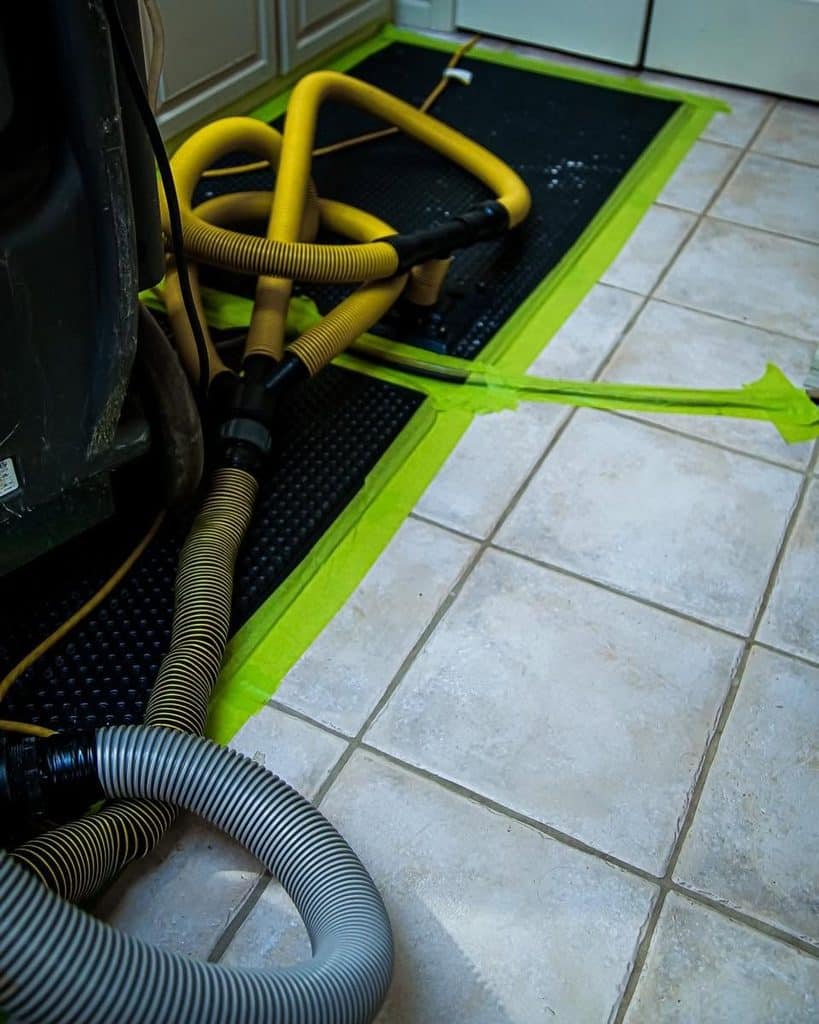
Working with a professional restoration company, like Frontier Restoration, ensures access to industrial-grade extraction units that operate on an entirely different level than consumer-grade rentals. These professional machines are engineered to create a deep-reaching vacuum seal, pulling moisture out of porous materials like subflooring, carpet fibers, and wall cavities that standard equipment leaves saturated.
Getting this water out immediately is the most critical step in preventing long-term structural rot and costly mold remediation.
Step 4: The Science of Structural Drying
Once the standing water is gone, the home still isn’t “dry.” Materials like drywall, wood studs, and concrete are porous—meaning they act like a heavy sponge that holds onto moisture.
Controlling the Indoor Environment
Whether it’s a humid July day or a damp spring morning, opening windows often introduces more moisture into the structure rather than letting it out. Additionally, household fans only move air around the room; they don’t actually remove the water vapor from the environment. To effectively dry a home and prevent mold, a scientific approach to “balanced drying” is required:
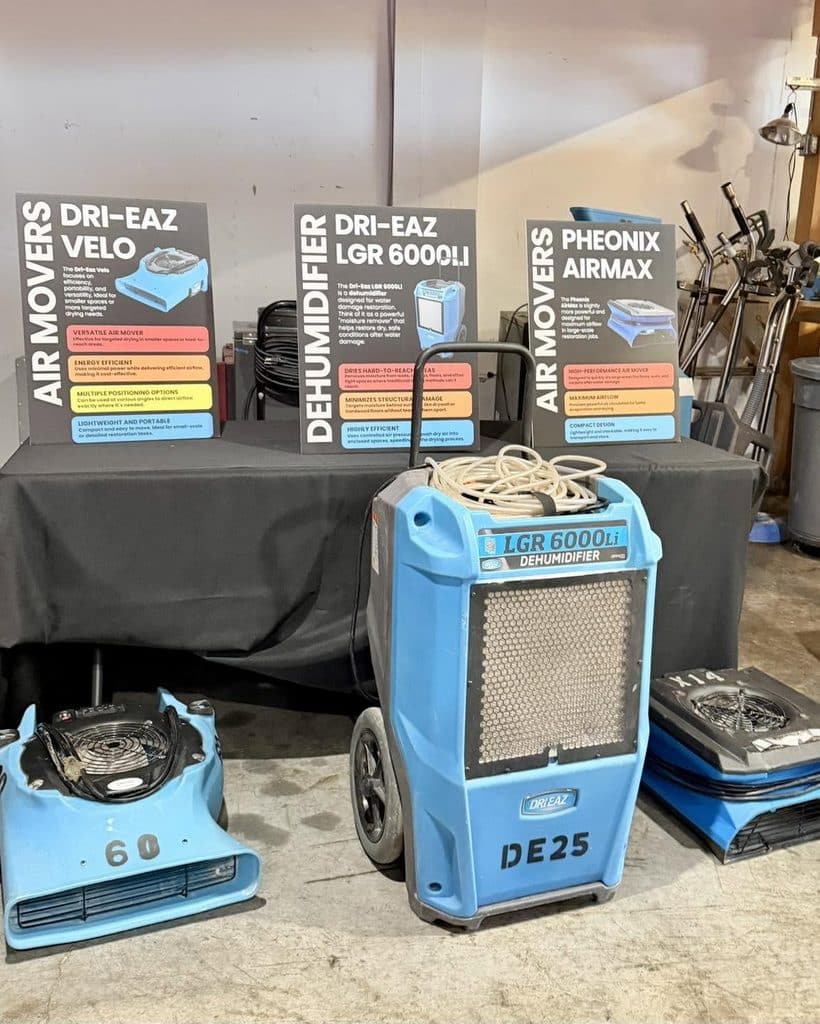
- Industrial Air Movers: These aren’t just fans; they are high-velocity machines designed to create a specific airflow pattern across surfaces, speeding up the rate of evaporation.
- LGR Dehumidifiers: Low Grain Refrigerant dehumidifiers pull massive amounts of water vapor out of the air, creating a “dry thirst” in the environment that pulls moisture out of the deep pores of your wood framing.
- HEPA Air Scrubbers: If there is a risk of airborne contaminants, we use scrubbers to ensure the air you’re breathing during the process is clean.
Step 5: Sanitization
The final step in the process is making your home “whole” again. Once the moisture levels have returned to normal and the industrial equipment is removed, the focus shifts from mitigation to restoration. This is a critical transition; while the emergency is over, the work of returning your life to normal is just beginning.
Sanitizing the Space
Water damage, especially from a sump pump failure or sewer backup, leaves behind bacteria and persistent odors. At Frontier Restoration, we use EPA-approved antimicrobial treatments to sanitize the structure. This is vital for the health of your family, especially in households with children or elderly residents in the KC metro.
Quick Water Damage Action Chart: Water Damage vs. Response
| Scenario | Priority Action | Professional Tool Needed |
| Burst Pipe | Shut off main water valve IF safe | Moisture Probes & Thermal Imaging |
| Sump Pump Failure | Move valuables to higher ground | Submersible Pumps & Antimicrobials |
| Roof Leak | Tarp the roof to stop the source | Industrial Dehumidifiers |
| Sewer Backup | Do NOT touch; Call Frontier | HEPA Air Scrubbers & Biohazard PPE |
| Appliance Leak | Turn off power to the kitchen | Weighted Extraction Tools |
Frequently Asked Questions (FAQ)
How Long Does the Drying Process Take?
On average, a home takes 3 to 5 days to dry completely. However, this depends on the materials involved. Hardwood floors and thick concrete in older Kansas City homes may take slightly longer than modern drywall.
Can I Save My Wet Carpet?
If the water was “Category 1” (clean), the carpet can often be saved with professional steam cleaning, though the padding underneath usually acts like a sponge and needs to be replaced. If the water was contaminated (sewage or outdoor flooding), the carpet and padding are a total loss and must be removed to prevent health risks.
What Are the Subtle Signs of Hidden Water Damage?
Look for peeling paint, a faint “musty” smell, or baseboards that feel slightly soft or warped. If your water bill in Prairie Village suddenly spikes without a change in usage, you likely have a hidden leak behind a wall or under the slab.
What Areas in Kansas City Does Frontier Restoration Serve?
We aren’t just contractors; we’re your Kansas City neighbors. At Frontier Restoration, we’ve spent years helping our local community bounce back from the unexpected. Whether you’re in the heart of Overland Park or in Olathe, our expert team is only a phone call away to proudly serve those in:
- Shawnee
- Lenexa
- Leawood
- Prairie Village
Don’t Face the Flood Alone, Call the KC Restoration Experts
When disaster strikes, you don’t just need a cleanup crew, you need a partner who can rebuild your home and your peace of mind. Whether you’re in Overland Park, Olathe, Lee’s Summit, or anywhere else in the Greater Kansas City area, Frontier Restoration is ready to help 24/7.
We pride ourselves on our transparency, our technical expertise, and our commitment to getting your life back to normal as quickly as possible. Every minute you wait increases the risk of mold and structural damage.
Don’t let water damage win. Contact Frontier Restoration now for an immediate professional assessment and take the first step toward a dry, safe home. Our team is ready to guide you through every step of the process, from mitigation to the final rebuild. Speak With a Restoration Specialist (913) 800-4980.