
In the heart of the Midwest, homeowners are no strangers to the challenges of shifting seasons. From sweltering, humid July afternoons to the sudden, heavy downpours that characterize our spring, the regional climate is a playground for moisture. At Frontier Restoration, we’ve seen firsthand how a small, unnoticed leak in a suburban basement or a humid attic in a busy metro neighborhood can quickly spiral into a significant mold infestation.
Mold isn’t just an aesthetic eyesore; it’s a silent threat to your property’s structural integrity and your family’s health. Because mold often thrives in the dark, damp, and hidden corners of your home, it can be difficult to spot before the damage is extensive. Understanding the warning signs is the first step in protecting your investment.
Here are 10 signs your home has a mold problem and why you should take action immediately.
1. A Persistent, Musty Odor
One of the most common early indicators of mold is a distinct smell. If you walk into your basement or a spare bathroom and notice an earthy, pungent, or “damp” odor that doesn’t go away with a bit of Febreze or an open window, you likely have hidden mold. In Kansas City’s older housing stock—like a charming Brookside cottage—moisture often gets trapped behind lath and plaster walls, creating a locker room like smell that signals mold is feeding on organic materials.
2. Visible Spores or Discoloration
This might seem obvious, but many homeowners mistake mold for dirt or soot. Mold can appear in a variety of colors: soot-like black, fuzzy white, slimy green, or even tinges of orange and brown. If you see “dirt” on your bathroom ceiling that keeps coming back after you wipe it away, it’s not dust—it’s a living organism. For example, we may get a call from a homeowner who notices small black specks appearing along the baseboards of their laundry room. Upon our inspection, it’s often discovered that a slow-leaking washing machine hose has been saturating the drywall from behind for weeks, allowing mold to colonize the wall cavity long before it became visible.
3. Water Stains and Discoloration
Mold and water are inseparable. If you notice yellow, brown, or gray staining on your ceilings or walls, it’s a sign of a past or current moisture intrusion. Even if the area feels dry to the touch now, the moisture that caused the stain likely penetrated the drywall or insulation, providing the perfect breeding ground for spores to settle and grow out of sight.
4. Bubbling Paint or Peeling Wallpaper
When moisture gets trapped between your wall and its finish—be it paint or wallpaper—it causes the adhesive to fail. If you see paint bubbling or wallpaper peeling away in a “damp” fashion, it’s a red flag. This often happens in Kansas City kitchens where steam from cooking isn’t properly ventilated, or in bathrooms without high-efficiency exhaust fans.
5. Increased Allergy or Respiratory Symptoms
Sometimes your body reacts to mold before your eyes ever see it. If you or your family members experience “seasonal allergies” that never seem to end—or if symptoms like sneezing, itchy eyes, and coughing worsen specifically when you are at home—mold could be the culprit. A common example is a family noticing that a child’s asthma flares up only while playing in a finished basement; this can be a sign of elevated spore counts concentrated in a specific zone of the home.
6. Condensation on Windows and Metal Pipes
In our region, the temperature swings between a 30-degree morning and a 60-degree afternoon can cause significant condensation on cold surfaces. If you see “sweating” on your window panes or droplets forming on cold-water pipes in the basement, your indoor humidity is too high (likely above 50%). Persistent condensation eventually drips onto wood sills or drywall, leading to localized mold growth.
7. Past Flooding or Unaddressed Leaks
If your home has ever experienced a “small” flood—perhaps a sump pump failure during a heavy KC thunderstorm—and it wasn’t professionally dried within 24 to 48 hours, there is a high probability that mold is present. Mold can begin to colonize in as little as one to two days. Don’t assume that because the carpet “looks dry” that the padding and subfloor beneath it aren’t harboring a problem.
8. Soft or Warped Flooring
If your hardwood floors are starting to “cup” (edges higher than the center) or if your linoleum feels “squishy” or soft, moisture is trapped underneath. Mold loves the organic glue used in many flooring types and the wood of the subfloor. A common scenario we encounter is a slow leak under a kitchen dishwasher that goes unnoticed until the hardwood starts to buckle.
9. Dark Spots on Your HVAC Filters
Your HVAC system is the lungs of your home. If you pull out your furnace filter and notice it is covered in dark, fuzzy spots rather than just gray dust, you may have mold growth within your ductwork. This is particularly dangerous because the system then blows those spores into every room of the house every time the air kicks on.
10. High Humidity Levels Indoors
If the air in your home feels “heavy” or “muggy,” your humidity levels are likely in the danger zone. Kansas City summers are notoriously humid, and without a properly sized AC unit or a whole-home dehumidifier, that outdoor moisture finds its way inside. If you use a hygrometer and consistently see readings above 60%, mold is likely already starting to form in hidden areas.
Understanding the Risks: Mold vs. Mildew
Many people use these terms interchangeably, but they are different. Understanding the difference helps you prioritize the level of professional help you need.
| Feature | Mildew | Mold |
| Appearance | Flat, powdery, usually white or gray | Fuzzy or slimy, can be black, green, or bright colors |
| Growth Pattern | Grows on surfaces in a flat pattern | Penetrates deep into porous materials (drywall, wood) |
| Odor | Faintly musty | Strong, pungent, earthy |
| Health Risk | Mild respiratory irritation | Can cause severe allergies, asthma, and infections |
| Ease of Removal | Usually can be scrubbed off with household cleaners | Requires professional remediation and moisture source repair |
Why Professional Remediation is Essential
If you suspect a mold problem, your first instinct might be to reach for a bottle of bleach. However, bleach often only kills the surface mold and doesn’t reach the “roots” embedded in porous materials like wood or drywall. Furthermore, scrubbing mold can actually release thousands of spores into the air, spreading the infestation to other parts of your home.
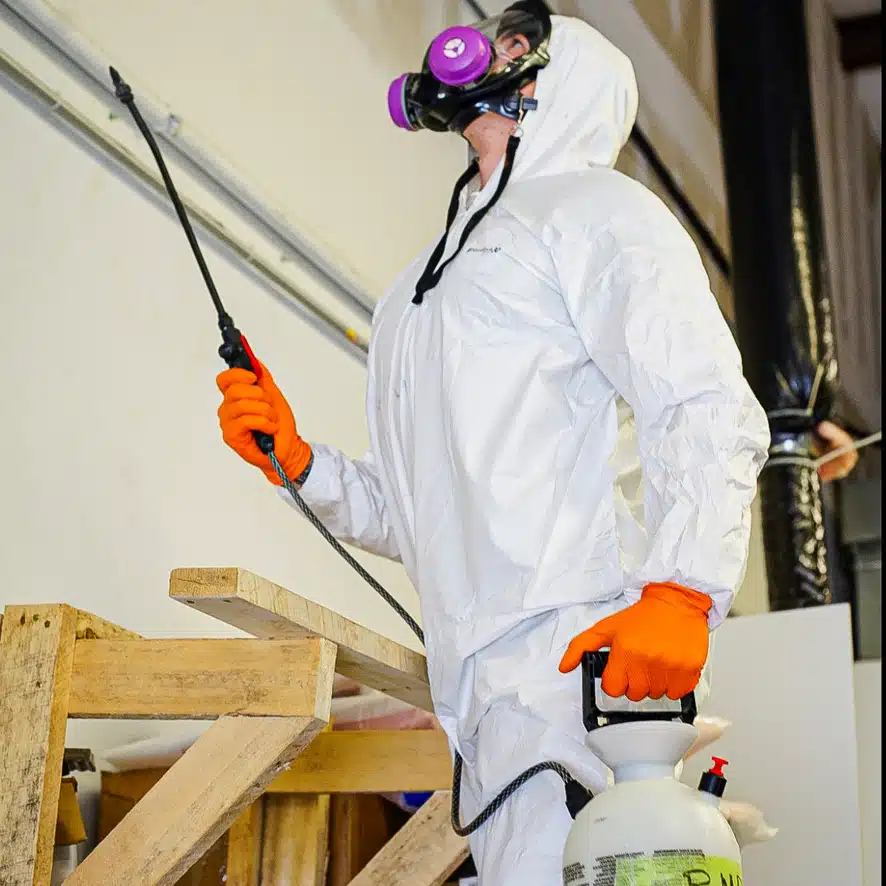
At Frontier Restoration, we follow a rigorous mold extraction process to ensure your home is safe:
- Assessment: We identify the moisture source—because if you don’t fix the leak, the mold will always come back.
- Containment: We use professional-grade barriers and negative air pressure to ensure spores don’t travel during the cleanup.
- Filtration: We use HEPA air scrubbers to “wash” the air and remove airborne spores.
- Removal & Sanitization: We safely remove contaminated materials and treat the remaining structure with antimicrobial agents.
- Drying: We ensure the area is 100% dry before any reconstruction begins.
Don’t Wait for the Problem to Grow
If you’ve noticed any of these 10 signs in your home, don’t wait for the problem to get worse. Mold spreads quickly, compromises your indoor air quality, and can lead to costly structural repairs if left unaddressed. Because mold begins to colonize within 24 to 48 hours of moisture exposure, a fast response is the most effective way to protect your property and your family’s health.
At Frontier Restoration, we are a locally owned and licensed Class “A” General Contractor. Our certified team doesn’t just clean up the surface; we identify the source of the moisture, provide professional remediation, and handle the full reconstruction of your home to ensure it is returned to a safe, healthy condition.
We provide a rapid emergency response for homeowners and businesses throughout the entire Kansas City metropolitan area, including:
- Kansas: Shawnee, Overland Park, Olathe, Lenexa, Leawood, and Prairie Village.
- Missouri: Lee’s Summit, Liberty, Blue Springs, Independence, Parkville, Platte County and Brookside.
- Counties Served: Johnson County (KS), Wyandotte County (KS), and Jackson County (MO), Platte County (MO).
Frequently Asked Questions (FAQ)
1. Can I Just Paint Over the Mold in My House ?
No. Painting over mold is like putting a band-aid on a broken leg. The mold will continue to eat the drywall or wood behind the paint, eventually causing the new paint to bubble and peel. You must remediate the mold and fix the moisture source before any aesthetic repairs are made.
2. Is “Black Mold” More Dangerous Than Other Types?
While Stachybotrys chartarum (the infamous black mold) is known for producing mycotoxins, any mold growing indoors is a health hazard and a sign of a moisture problem. All molds can trigger allergies and respiratory issues, so any color of mold should be treated with the same level of urgency.
3. How Long Does The Removal Process Take?
Every case is different, but a typical professional remediation project takes between 3 to 7 days. This allows time for proper containment, removal of materials, and—most importantly—thorough drying of the area to prevent regrowth.