
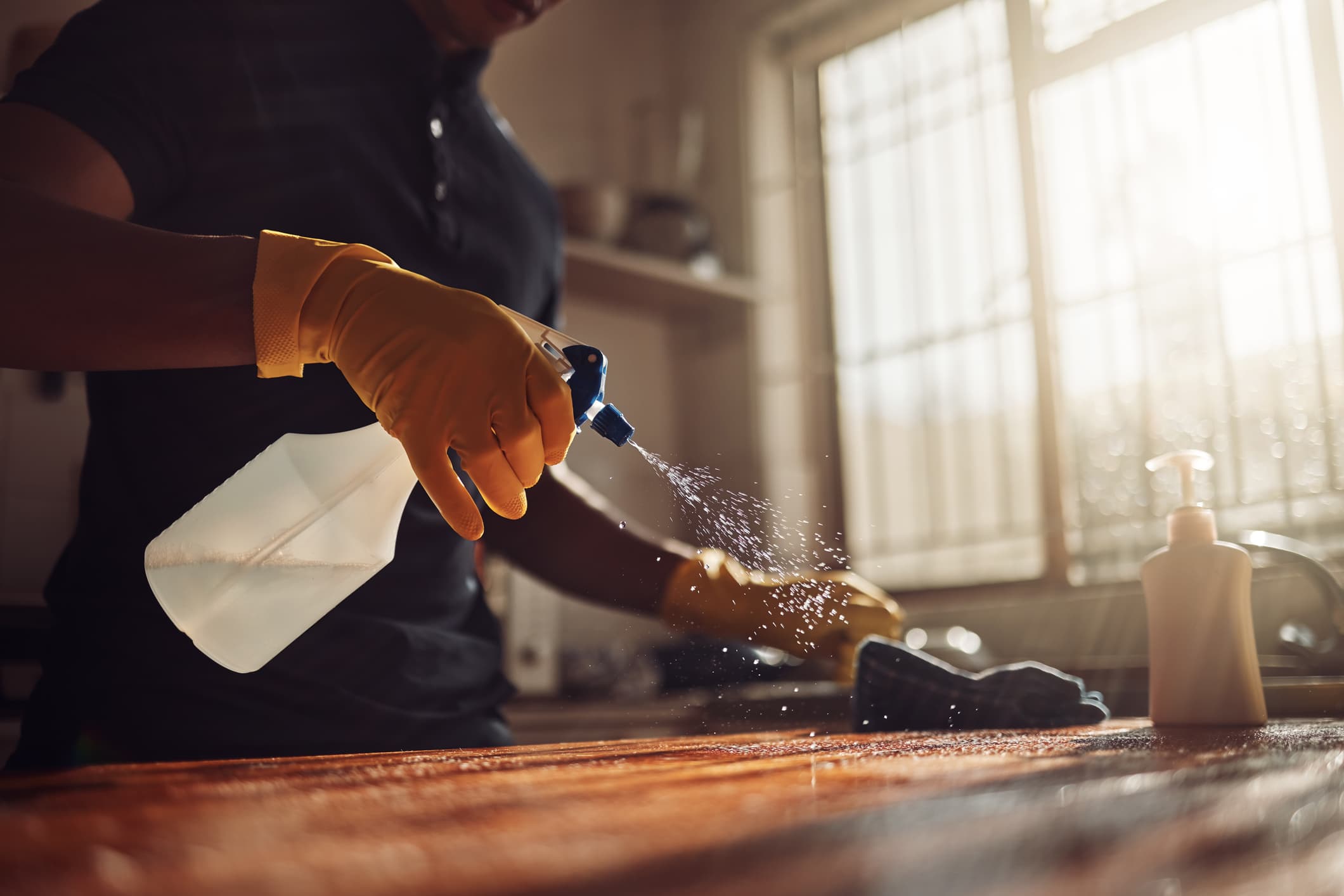
If you have spent a single spring in the Kansas City metro, you know the sound: the low rumble of a Midwestern thunderstorm that inevitably turns into a torrential downpour. Whether you are living in a historic home in Brookside or a modern home in Overland Park, that water doesn’t always stay on the outside. When a basement drain backs up in Lee’s Summit or a pipe bursts in a Liberty attic, the natural human instinct is to grab a stack of towels, a mop, and a bottle of bleach.
We call this the “Surface Wiping Trap.”
At Frontier Restoration, we act as your water advocate. We’ve seen countless homeowners in Olathe and Blue Springs try to DIY their way out of a flood, only to find that weeks later, the air smells musty and the baseboards are beginning to warp. The truth is, what you see on the surface is rarely the whole story.
To truly protect your home from any type of moisture damage, you have to move past simple cleanup and embrace the necessity of structural mitigation.
The Illusion of “Dry”: Why the Eye Cannot Be Trusted
When water enters a home, it behaves like a living entity. It seeks the path of least resistance, following gravity and capillary action into the “deep tissue” of your house. It doesn’t just sit on top of your subfloor; it travels through it.
Imagine a common scenario: A washing machine overflows in a second-floor laundry room in Shawnee. The homeowner mops up the standing water within an hour. The floor looks dry. The crisis feels over. However, that water has already seeped under the floorboards, wicked up the drywall, and saturated the floor joists below.
While the surface is “clean,” the structure is drowning. This is why saturated material handling is a job for licensed building specialist. Without industrial-grade dehumidification and moisture-tracking technology, that trapped moisture becomes a silent threat to your home’s skeletal integrity.
The Science of Professional Detection: Frontier’s Toolkit
Why can’t you just wait for it to air out? Because you cannot manage what you cannot measure. Frontier Restoration utilizes a suite of professional-grade diagnostic tools that go far beyond the capabilities of a hardware store moisture meter. These tools allow us to see the “root” of the moisture before it turns into a permanent structural failure.
1. Thermal Imaging (Infrared Technology)
Water changes the temperature of the materials it inhabits. Using high-resolution Thermal Imaging, our specialists can scan a seemingly dry living room in Mission Hills and see exactly where the water is hiding behind the plaster. These cameras highlight “cold spots” that indicate moisture plumes, allowing us to target our drying efforts without unnecessarily tearing down walls that are actually dry.
2. Non-penetrating Moisture Reading
We respect the beauty of your home. To check for moisture in expensive hardwood floors or delicate cabinetry, we use non-penetrating moisture reading devices. These tools use electrical impedance to detect moisture levels deep within a material without leaving a single mark, scratch, or hole. This allows us to monitor the drying progress of your high-end finishes daily without compromising their aesthetic value.
3. Penetrating Moisture Probes
In areas like crawlspaces or unfinished basements in North Kansas City, we use penetrating probes to get an exact percentage of moisture content within the wood studs. This ensures we don’t stop the drying process until the “root” of the wood is back to its dry standard—usually between 8% and 12% moisture content. Without this measurement, you are simply guessing at the health of your home’s frame.
The Insurance Reality: Why Speed is Your Best Financial Strategy
One of the most critical reasons to prioritize professional moisture mitigation is the way insurance policies are written. Most standard homeowners’ insurance policies in Missouri and Kansas are designed to cover “sudden and accidental” water discharge. This includes pipe bursts, water heater failures, and appliance overflows.
However, there is a catch.
Some insurance companies have strict limits—or total exclusions—regarding secondary issues like organic growth. If you attempt a DIY cleanup and leave moisture trapped behind the baseboards, the resulting growth may be labeled as “preventable” or “neglected maintenance” by your adjuster.
By hiring full-scale recovery experts immediately, you are demonstrating “loss mitigation.” We provide the digital documentation, thermal images, and moisture logs that prove you took every necessary step to save the property. The Golden Rule: Clean up the water first, and clean it right, to ensure your claim stays on the right side of the policy. Most carriers would much rather pay for three days of high-tech drying than a month of reconstruction.
Strategic Evaporation: Moving the Air, Saving the House
DIY fans often set up a few household fans and call it a day. In the humid Kansas City summers, this can actually make things worse. High-volume air movement without controlled dehumidification simply moves the moisture from the floor into the air, where it can then settle on your ceiling, furniture, and electronics. This is known as “secondary damage.”
Our approach involves:
- LGR Dehumidifiers: These “Low Grain Refrigerant” units pull massive amounts of water vapor out of the air, even in cool environments like a KC basement.
- High-Velocity Air Movers: These are strategically placed to create a vortex of air that “breaks” the surface tension of the water on materials, forcing it to evaporate so the dehumidifier can capture it.
- HEPA Scrubbers: To maintain air quality during saturated material handling, we use industrial air scrubbers to filter out dust and particulates, keeping your home’s environment breathable and safe for your family.
A Hypothetical Look: The “Invisible” Flood
To understand why surface drying fails, consider a hypothetical scenario in a suburb like Independence. Imagine a homeowner discovers a sump pump failure after a heavy rain. To the naked eye, the basement has about an inch of water. They spend the weekend using a shop vac and running a small household dehumidifier. By Sunday night, the carpet feels dry to the touch, and they assume the crisis is averted.
However, if a licensed remediation specialist were to walk in on Monday morning with non-penetrating moisture reading tools, the reality would likely look much different. Behind the baseboards, water could have already wicked 18 inches up the drywall. The carpet padding—which acts like a giant sponge—would likely still be completely saturated, even if the fibers on top feel dry.
In this scenario, waiting even one week could mean the structural integrity of the drywall is lost forever. By shifting the focus from “surface cleaning” to moisture-related reconstruction early on, a professional team can often save the framing and prevent a total loss. Acting as a Water Advocate, the professional team provides the data needed for insurance, proving the water was handled correctly before it could lead to deeper structural issues.
The “Water Advocate” Commitment: Don’t Wait for the Damage to Sink In
Tagline: Choose Structural Integrity Over Surface Fixes
When water invades your home, every hour that passes allows moisture to move deeper into the “root” of your property’s structure. A “dry” surface is a dangerous illusion that can lead to costly structural failures and insurance headaches down the road. You deserve more than a mop and a bucket; you deserve a water advocate who uses the industry’s most advanced technology to protect your investment.
At Frontier Restoration, we don’t just clean up the mess—we execute a precision structural mitigation plan that restores your peace of mind and preserves your home’s value. From the first drop to the final moisture log, we stand by your side to ensure your property is truly dry, safe, and sound.
Don’t gamble with the integrity of your home. Reach out to Kansas City’s preferred restoration team today and let us handle the science of recovery for you.
Frequently Asked Questions (FAQs)
1. Can’t I Just Use Bleach to Kill Any Growth After a Leak?
Bleach is mostly water. While it can handle visible growth on non-porous surfaces like tile, it can actually provide more moisture to porous materials like wood or drywall. Deep-tissue microbial treatment by professionals is required for lasting results.
2. How Long Does The Structural Drying Process Take?
Every case in the KC area is different depending on our local humidity, but typically, structural mitigation takes between 3 to 5 days. We monitor the progress daily with moisture meters to ensure the building is back to its “dry standard.”
3. Is It Really Necessary to Remove The Carpet Padding?
In most cases of significant saturation, yes. Padding is designed to be soft and porous, making it nearly impossible to dry in place. Removing it allows us to perform saturated material handling on the subfloor, which is the foundation of your room’s health.