
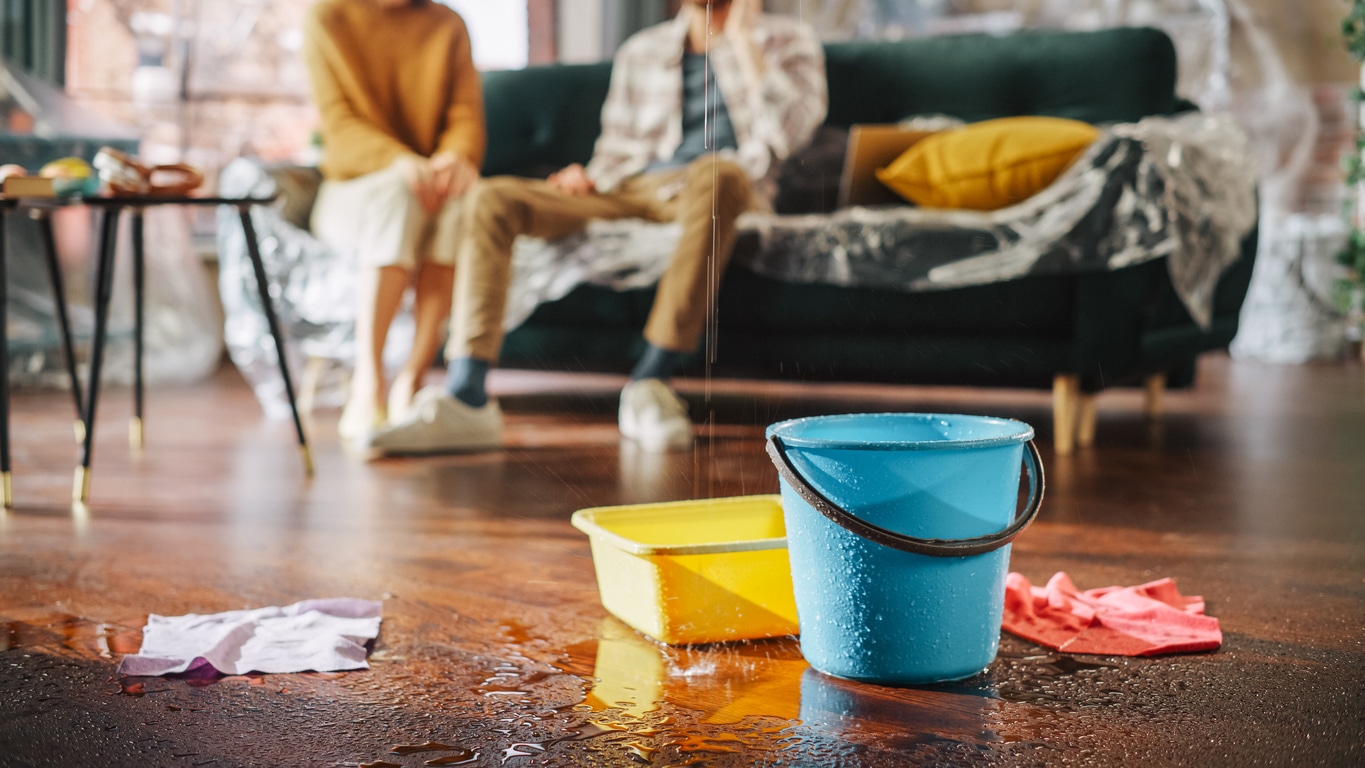
It is 2:00 AM in the middle of a brutal Kansas City winter freeze, or perhaps during a volatile Midwestern storm season. A sudden, unusual sound wakes you up—maybe a soft rushing noise or the ominous rhythm of water dripping through a first-floor ceiling. You step out of bed, only to feel your socks instantly soak through. The dread sets in immediately. A pipe burst overnight, turning your living room, basement, or kitchen into an impromptu indoor pool.
In a panic, you sprint to the main water shut-off valve, turn it hard to the right, and finally hear the rushing water cease. You take a deep breath, believing the crisis has been managed. The leak has stopped, so the emergency is over, right?
Unfortunately, that is rarely the case. While shutting off the water source is a crucial first step, it is actually only the halfway mark of a much larger crisis. Dealing with water damage from pipe burst incidents involves addressing hidden threats that continue long after the plumbing has been repaired. For homeowners across the Kansas City metro area, true safety requires the rapid deployment of a dedicated emergency restoration provider.
The Hidden Mechanics of Water Migration in KC Homes
When a plumbing failure occurs, water does not simply sit neatly on top of your flooring waiting to be mopped up. It behaves according to the laws of physics, seeking out every path of least resistance. This process is known as water migration, and it can begin within minutes of the initial rupture.
Whether you live in a historic home in Brookside with classic lath-and-plaster walls or a modern build in Jackson County with multi-level layouts, water travels fast and settles deep.
Capillary Action and Wicking
Porous building materials act like giant sponges. Drywall, insulation, baseboards, and subflooring possess a natural ability to wick moisture upward and outward. Even if standing water is only an inch deep on a hardwood floor, moisture may potentially travel up to a foot or more inside the cavity of the adjacent walls.
Gravity and Low Points
Water naturally flows downward. A breach on an upper level can mean that moisture migrates through the ceiling grid, down inside structural columns, and into the levels below. By the time you notice a stain on your first-floor ceiling, gallons of water may already be trapped between your joists, soaking into your insulation and compromising structural materials.
The Invisible Trapped Moisture
Air looks dry, and surfaces can occasionally feel dry to the touch, but deep within the structural assembly of your home, moisture levels may remain dangerously high. Without specialized detection equipment—such as thermal imaging cameras and moisture meters—identifying exactly where the water has traveled is nearly impossible. This is why a professional assessment is vital.
Why Structural Materials Face Long-Term Risks
Structural components are designed to bear weight and provide stability, but they are generally not manufactured to withstand prolonged saturation. When moisture is allowed to sit inside these materials, their structural integrity can rapidly degrade.
- Drywall Disintegration: Standard interior drywall is composed of gypsum pressed between sheets of paper. When saturated, it loses its structural density, leading to sagging, buckling, and eventual collapse.
- Subfloor Swelling: Materials like plywood and oriented strand board (OSB) are frequently used for subflooring. Saturated subflooring can swell, delaminate, and lose its ability to support the weight of furniture securely.
- Hardwood Cupping and Crowning: Hardwood flooring reacts intensely to moisture changes. As the bottom of the wood planks absorbs water faster than the top, the edges can lift (cupping), or the center can bulge upward (crowning), potentially ruining the installation permanently.
- Fastener Corrosion: Screws, nails, and metal brackets that hold your framing together may begin to rust and weaken when exposed to high-humidity environments for extended periods.
The Critical Timeline of Property Damage
Time is the most critical variable following a plumbing failure. The longer moisture remains unaddressed, the more severe the secondary consequences can become. Our local climate—characterized by humid summers and unpredictable seasonal shifts—can accelerate these timelines, making immediate intervention essential.
To illustrate how quickly conditions can deteriorate, consider the typical progression of unmitigated moisture:
| Time Elapsed | Potential Structural Impact | Microbial & Environmental Risks |
| Within 1 Hour | Water spreads rapidly, saturating carpets, pad, furniture, and baseboards. | Paper goods, books, and delicate items are ruined immediately. |
| 24 Hours | Drywall begins to sag and swell; metal surfaces may start to tarnish; hardwood begins to show signs of moisture stress. | Musty odors may start to develop; dormant microbial spores can become active. |
| 48 Hours | Doors and windows can swell and stick; paint or wallpaper may begin to blister; structural wood begins to soften. | Fungal growth and microbial colonies can begin to establish themselves on organic surfaces. |
| 1 Week + | Structural framing may begin to warp; major drywall replacement is typically required; subfloors may become entirely unsafe. | Biological contaminants can spread through the air handling systems, creating widespread air quality concerns. |
The Threat of Secondary Microbial Growth
One of the most compelling reasons that stopping a leak is only half the battle is the threat of microbial and fungal development. Microscopic spores exist naturally everywhere in our environment, both indoors and outdoors. Under normal circumstances, they are completely harmless and remain dormant.
However, these spores require only three things to thrive and multiply rapidly:
- Moisture (provided by your plumbing emergency).
- An organic food source (such as the paper backing on drywall, wood framing, ceiling tiles, or carpet padding).
- Moderate temperatures (typically found inside a climate-controlled home).
Within 24 to 48 hours of a pipe burst overnight, these spores can find the ideal conditions to colonize. Because these colonies frequently grow inside wall cavities, under carpeting, and behind baseboards, they can expand completely out of sight. By the time a Kansas City homeowner notices a musty odor or visible discoloration, the biological impact may already be widespread, requiring extensive, specialized cleanup efforts to resolve safely.
Navigating the Complexities of Insurance Documentation
When dealing with significant property issues, your insurance policy is your primary safety net. However, securing the coverage you are entitled to requires comprehensive documentation and adherence to specific protocols. Insurance providers generally expect policyholders to take immediate action to mitigate further damage.
Simply turning off the water valve is a great start, but leaving the property wet for several days can be viewed by insurance adjusters as a failure to mitigate damage. This delay might result in a partial or full denial of coverage for any secondary issues that arise, such as structural rot or microbial growth.
Professional documentation involves creating a detailed record of the incident, including:
- Thermal images showing the hidden pathways of water migration.
- Moisture content readings taken from affected materials daily to prove drying progress.
- Detailed lists and photographs of all affected structural components and personal property.
- Psychrometric charts documenting that the relative humidity inside the structure was managed properly during the drying process.
Attempting to gather this level of technical data on your own while managing the emotional stress of a flooded home can be completely overwhelming.
Frontier Restoration: Your Trusted Emergency Restoration Provider
Resolving a major plumbing failure correctly requires sophisticated equipment, specialized training, and a deep understanding of drying science. This is not a situation where a few household fans and a shop vac will suffice. You need an emergency restoration provider capable of arriving on the scene at a moment’s notice to halt the damage in its tracks.
Why the Emergency Response Matters: Water mitigation isn’t a project that can wait for normal business hours. Every hour that passes allows water to seep deeper into your home’s structural bones. An emergency provider treats your property like an active crisis area, deploying industrial-grade extraction and drying technology immediately.
When you face this type of midnight emergency, partnering with the professional team at Frontier Restoration makes an immense difference in the outcome of your property recovery.
24/7 Rapid Deployment Across Kansas City
We don’t wait for the sun to come up to start protecting your home. As a dedicated emergency restoration provider, Frontier Restoration maintains teams that are ready to mobilize at any hour of the day or night. When you call us with a pipe burst overnight, our technicians respond quickly, bringing the heavy-duty water extractors, desiccant dehumidifiers, and moisture detection tools required to stabilize your home immediately.
Direct Insurance Coordination
One of the most stressful aspects of a property emergency is managing the financial and administrative details with your insurance provider while dealing with a flooded house. At Frontier Restoration, we work directly with your insurance companies. We understand exactly what adjusters throughout the Kansas City region need to see to process your claim smoothly. We handle the technical documentation, provide clear, itemized estimates using industry-standard software, and communicate directly with your carrier. This direct line of communication helps alleviate your stress and ensures that your claim moves forward as efficiently as possible.
The Power of Being Locally Owned
In an era dominated by massive corporate conglomerates and national franchises, choosing a locally owned company offers distinct advantages. When you call a national chain, your request often goes through an out-of-state call center, and decisions must crawl through layers of corporate bureaucracy before help is dispatched.
Frontier Restoration is a locally owned company, which means there is significantly less red tape. We have the agility to make decisions instantly, deploy emergency teams immediately across the metro area, and customize our approach to your specific situation without waiting for corporate approval. More importantly, we live and work in the same Kansas City neighborhoods you do. Our reputation is built on how well we take care of our neighbors, meaning you receive personalized, dedicated attention from professionals who genuinely care about restoring your peace of mind.
Don’t Let a Temporary Leak Cause Permanent Damage
Discovering that a pipe burst overnight is a jarring experience, but how you handle the hours immediately following the event determines the future health of your home. Stopping the water flow is an essential first step, but the invisible moisture left behind continues to pose a threat to your structural framing, your indoor air quality, and your family’s comfort.
If you have experienced water damage from pipe burst incidents, do not wait for musty odors or sagging walls to tell you there is a problem. Let the experienced, local professionals handle the heavy lifting, navigate the insurance paperwork, and ensure your home is thoroughly and safely dried out.
If your Kansas City home has suffered a plumbing emergency, time is of the essence to prevent secondary damage. Don’t wait for the damage to worsen—call Frontier Restoration right now to dispatch our local Kansas City emergency team directly to your property and safeguard your home.